
When people hear that Dholera has an airport, the first question is usually: "Does it actually have flights?" That is a fair question. Let me give you the honest answer.
What is actually there
The airport exists. It is not a construction site or a proposal. There is a 3,200m runway, a passenger terminal, and cargo facilities. I have seen it. The runway is long enough for wide-body aircraft like Boeing 777s and Airbus A330s.
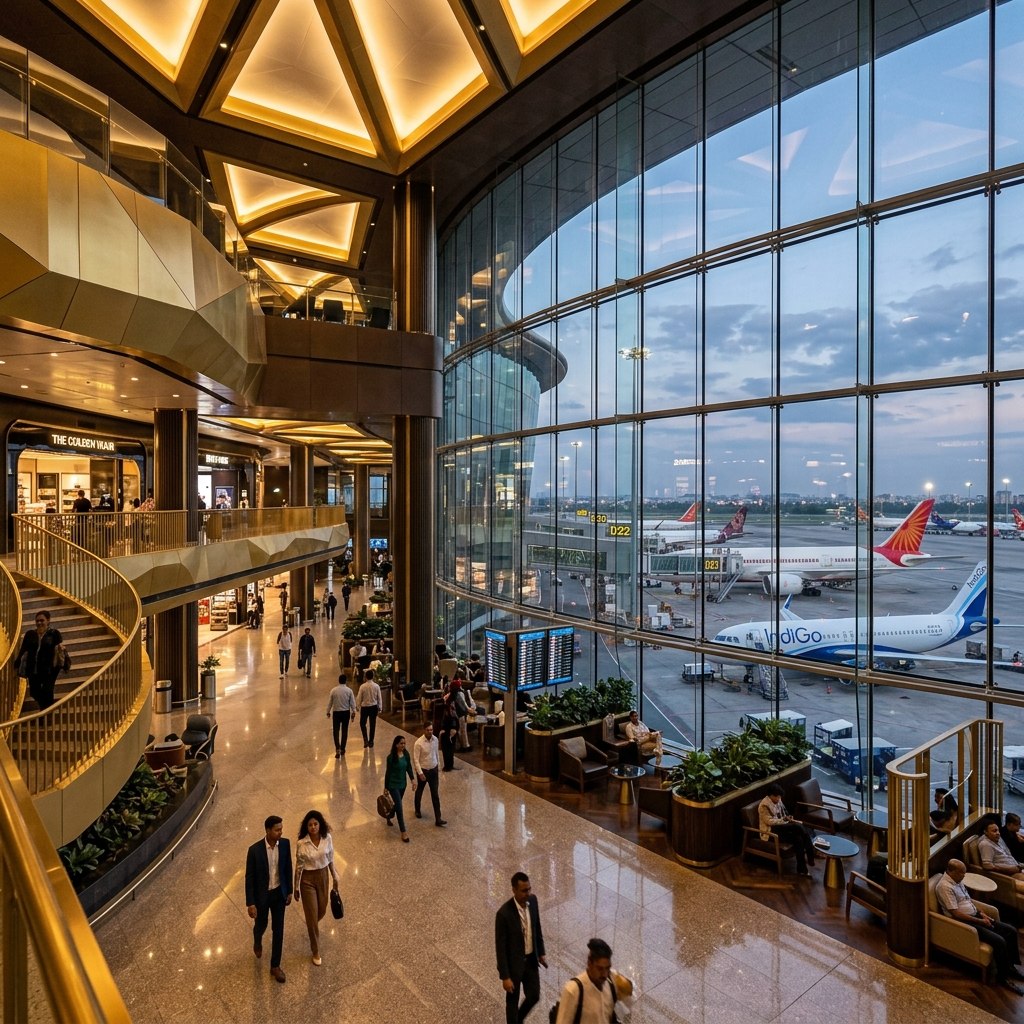
The passenger terminal is built and operational for Phase 1. It has capacity for domestic flights initially. The terminal is modern, with proper check-in counters, security screening, and boarding gates.
Cargo handling facilities are in place. This is important because the semiconductor fab and other industries need air freight for components and finished products. The cargo capability is a significant logistics advantage for businesses setting up in Dholera.
A dedicated 9.56 km spur road connects the airport directly to the Ahmedabad-Dholera Expressway. This means cargo and passengers can move between the airport and Ahmedabad without passing through local roads or village traffic. The spur road is a separate piece of infrastructure that makes the airport actually useful for logistics.
What about flights?
Here is where I need to be honest. The airport is operational, but it does not have a full schedule of commercial flights yet. Phase 1 is designed for initial operations. Full commercial operations with multiple airlines and regular scheduled flights are still developing.
This is normal for a new airport. Airports need passenger demand to attract airlines. Airlines will not start routes until there are enough passengers to make the routes profitable. This creates a chicken-and-egg problem: passengers will not come until there are flights, and airlines will not start flights until there are passengers.
The way this gets solved is through industrial development. When the semiconductor fab becomes operational and thousands of workers are in Dholera, the demand for flights will increase. Airlines will start routes because there will be passengers.
What is planned
Phase 2 expansion will add a larger terminal, more gates, and increased cargo capacity. The timeline depends on demand growth. As Dholera develops and the population increases, the airport will expand to meet the demand.
International flights are planned as demand grows. The airport's location near the DMIC corridor and the semiconductor fab makes it strategically positioned for international cargo routes. When Tata starts shipping chips internationally, the airport's cargo capability will be a significant advantage.
Plans exist for an aircraft maintenance, repair, and overhaul (MRO) facility. This would create additional employment and attract airlines to the airport. An MRO facility is a big deal because it means airlines can service their aircraft at Dholera, which makes the airport more attractive as a hub.
Why the airport matters for investors
The airport affects property prices in several ways.
First, connectivity. The airport gives Dholera direct air connectivity to major Indian cities and eventually international destinations. This makes the location more attractive for businesses and residents. Even if commercial flights are limited now, the fact that the airport exists and is operational is a strong signal.
Second, cargo operations. The semiconductor fab and other industries need air freight for components and finished products. The airport's cargo capability is a significant logistics advantage. This is not about passenger flights. It is about moving goods efficiently.
Third, employment. Airport operations, cargo handling, and ancillary services create jobs. Those workers need housing, driving demand for residential plots. Even a small airport creates hundreds of direct and indirect jobs.
Fourth, property appreciation. Plots near the airport corridor have seen approximately 2x appreciation since 2020. The airport is one of the strongest growth drivers for the area. The premium for airport proximity is real and likely to increase as the airport expands and adds more routes.
Airport corridor property prices
| Location | Price Range (per sq. yard) | Trend |
|---|---|---|
| Adjacent to airport | Rs 2,000-2,800 | Strong growth |
| Within 5 km | Rs 1,500-2,200 | Steady growth |
| 5-10 km from airport | Rs 1,200-1,800 | Moderate growth |
The premium for airport proximity is real. Plots adjacent to the airport are selling for Rs 2,000-2,800 per sq. yard. Within 5 km, prices are Rs 1,500-2,200 per sq. yard. The further you go, the lower the prices.
This premium is likely to increase as the airport expands and adds more routes. The combination of expressway and airport connectivity is rare for a greenfield city. Most greenfield projects have one or the other, not both.
The bottom line
Dholera International Airport is operational with a 3,200m runway, passenger terminal, and cargo facilities. The airport spur road connects it directly to the expressway. Phase 2 expansion and international operations are planned as demand grows.
For investors, the airport corridor is one of the most promising zones in Dholera. The combination of air connectivity, cargo capability, and employment generation makes it a strong long-term investment. The fact that the airport exists and is operational is a strong signal that Dholera is a real project, not a government announcement.
Want to explore plots near the airport? Contact our team.