5,000 MW solar park, wind corridors, and grid storage powering India's largest greenfield industrial city.
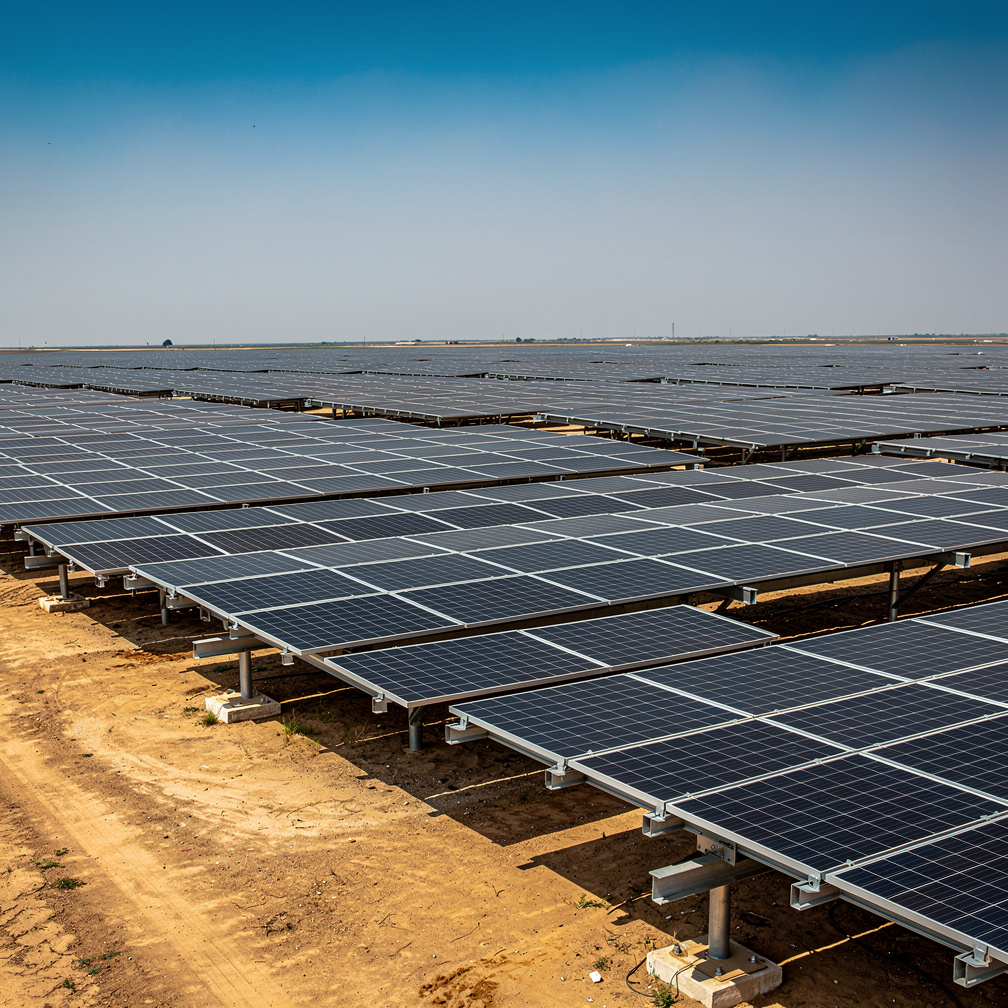
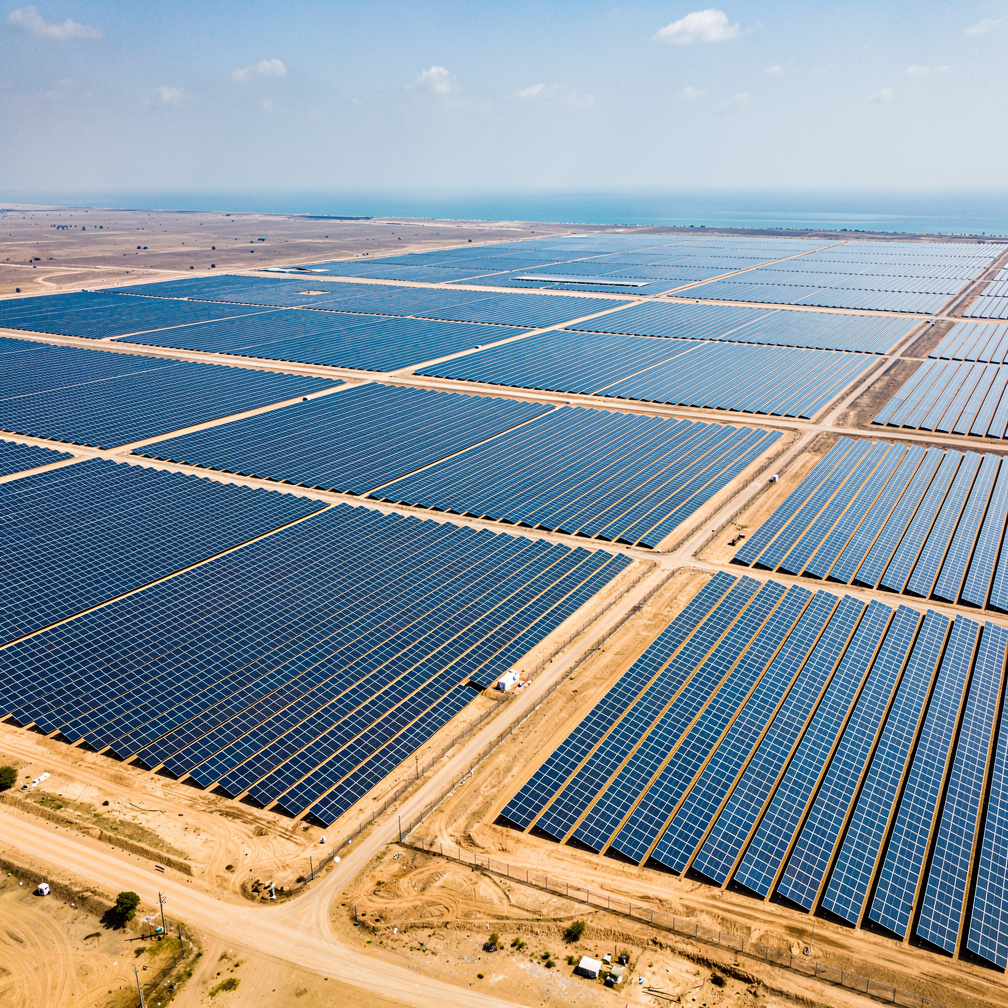
The Dholera Ultra Mega Solar Park is an officially approved **5,000 MW state and central government project** under the Ministry of New and Renewable Energy (MNRE), sanctioned by the **Gujarat government**. The park spans 11,000+ hectares of CRZ-1B classified mudflats in the Gulf of Khambhat. CRZ-1B land is coastal zone land with no agricultural, residential, or commercial value. It sits unused. The Gujarat government, MNRE, and Solar Energy Corporation of India (SECI) approved this park to convert unused coastline into a power source capable of generating 5,000 MW at full buildout by 2030, representing roughly 1% of India's 500 GW non-fossil energy target.
The project is not being built as a single block. It is developing in three phases that allow grid infrastructure and generation capacity to scale together.
Phase 1 was initiated in 2022, with GPCL implementing the first 1 GW. Tata Power Renewable Energy was awarded a confirmed **250 MW** capacity through GUVNL tender in 2019 (plus additional 300-700 MW in subsequent bids to multiple developers including Vena Energy, ReNew Power, SJVN, and TEQ Green Power). Additional Phase 1 capacity is under construction with tenders awarded through GUVNL and SECI to multiple developers. Phase 2 is in the planning and bidding stage, with capacity allocations being decided through competitive tendering. Phase 3 forms the long-term pipeline, where SECI and GUVNL are coordinating international consortia and industrial offtakers. The full 5,000 MW target is expected by 2030. The staggered approach solves a real problem: India's larger solar parks have hit grid bottlenecks when too much capacity came online before transmission infrastructure was ready. Dholera avoids this by building both in parallel.
The transmission chain from panel to factory floor is purpose-built for industrial supply, not grid export.
Solar panels, both monocrystalline and polycrystalline modules mounted on single-axis trackers, generate electricity that feeds into a 49-kilometer underground 33kV saline-resistant cable network. That network connects panel arrays across the 11,000-hectare site to substations where voltage is stepped up from 33kV to 200kV for bulk transmission. From there, the power enters GETCO/POWERGRID 400kV lines that connect to the national transmission backbone.
At the local distribution level, Torrent Power manages 400/220 kV gas-insulated substations with 1,500 MVA capacity. GIS technology is essential here. Air-insulated substations corrode quickly in saline coastal environments. Gas-insulated units seal the critical components in sealed enclosures, keeping salt and moisture out. From these substations, electricity flows to industrial end-users: the semiconductor fab, data centers, manufacturing facilities, and the broader Dholera SIR industrial zone. The entire chain is monitored through SCADA systems that track power flow in real time.
The Gulf of Khambhat has some of the highest tidal ranges on Earth, over 11 meters at spring tide. Salt spray reaches far inland. The soil is saline. These conditions destroy standard solar park equipment. What works in Rajasthan's Bhadla Solar Park, the world's largest at 2,245 MW, would corrode and fail at Dholera within a few years.
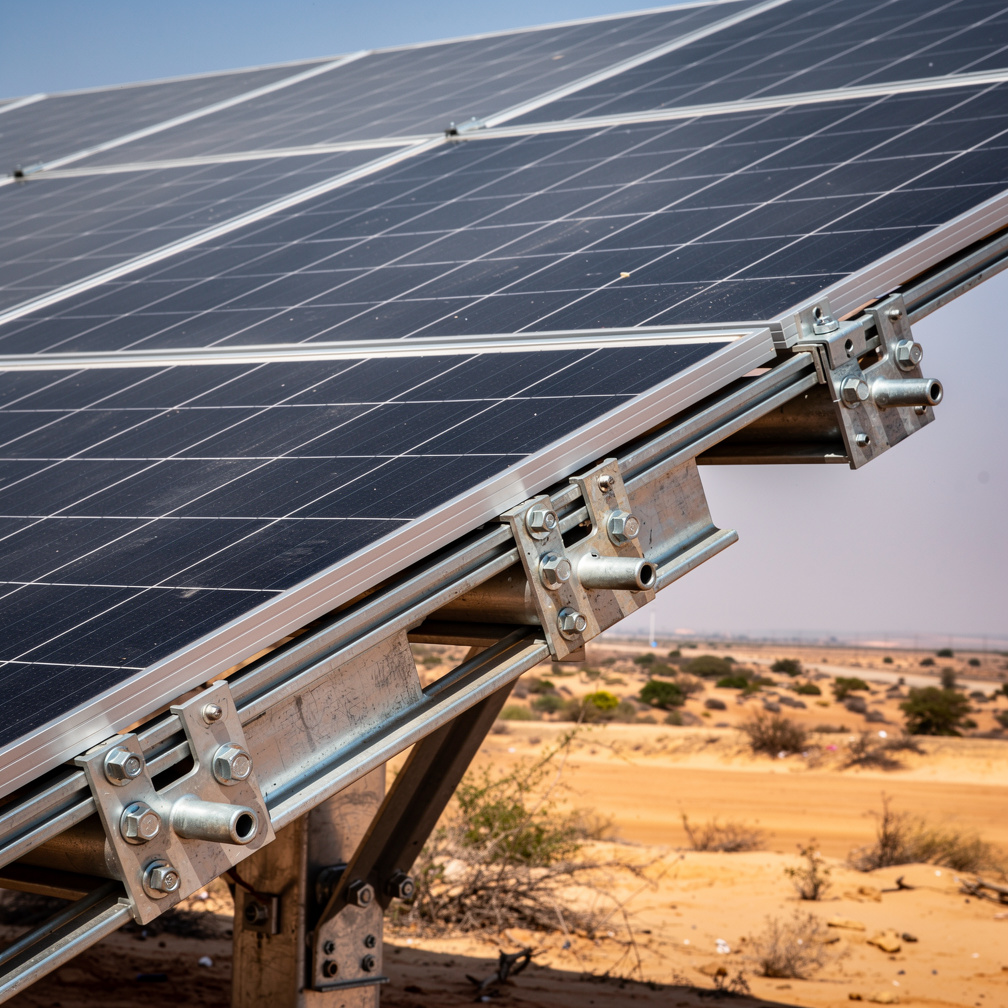
So every component is specified for high-salinity operation. Underground cables use saline-resistant insulation rated for the specific chloride concentrations found in Gulf of Khambhat coastal soil. Burial depth accounts for tidal water table fluctuations. Cable jacketing resists chemical degradation from salt exposure. Junction boxes, combiner boxes, and transformer stations all meet saline environment specifications. Elevated tracker foundations raise the panels above the CRZ-1B flood line, keeping equipment above the highest tidal surge. Standard galvanized steel corrodes in these conditions. Dholera's trackers use marine-grade coatings and stainless steel hardware rated for decades of salt air exposure.
The result is a solar park where the electrical infrastructure has a realistic 25-year design life, matching the panel warranty period. Inland parks sometimes cut corners on electrical components because the environment is forgiving. Dholera does not have that luxury, and the engineering reflects it.
Dust accumulation on solar panels reduces output. In most installations, this is managed by washing panels with water. In Dholera, that approach is impractical for two reasons. Freshwater is scarce in the coastal zone, and the Gujarat government had not approved water licenses for module washing at the solar park. Developers were therefore required to adopt waterless cleaning systems.
Developers installed robotic cleaning systems that remove dust and debris mechanically without water. Automated robots traverse the panel surfaces on scheduled cycles, clearing dust without scratching the glass coating. They operate during low-generation periods to avoid disrupting power output.
This approach eliminates water consumption for panel maintenance entirely. Over a 25-year panel lifecycle, that adds up to significant savings in both water costs and the logistics of water supply in a remote coastal location. The robots also produce more consistent cleaning results than manual washing.
The renewable ecosystem exists to serve industries located within Dholera SIR. These are committed projects with precise power requirements.
Phase 1 developers include Gujarat Power Corporation Ltd (GPCL), which is implementing the first 1 GW, and Tata Power Renewable Energy, which was awarded 250 MW through GUVNL tender in 2019. Additional contracts have been awarded to multiple developers through competitive bidding, including Vena Energy, ReNew Power, SJVN, and TEQ Green Power.
The key difference between Dholera's renewable ecosystem and India's other large solar parks is consumption. Bhadla, at 2,245 MW, exports power to the northern grid through long-distance transmission. Dholera's 5,000 MW park is designed for local consumption within walking distance of the panels. There is no long-distance transmission loss. There is no exposure to grid congestion. The power is generated where it is used, and industrial users pay predictable, competitive rates for clean electricity over long-term power purchase agreements.
← Back to Industries