
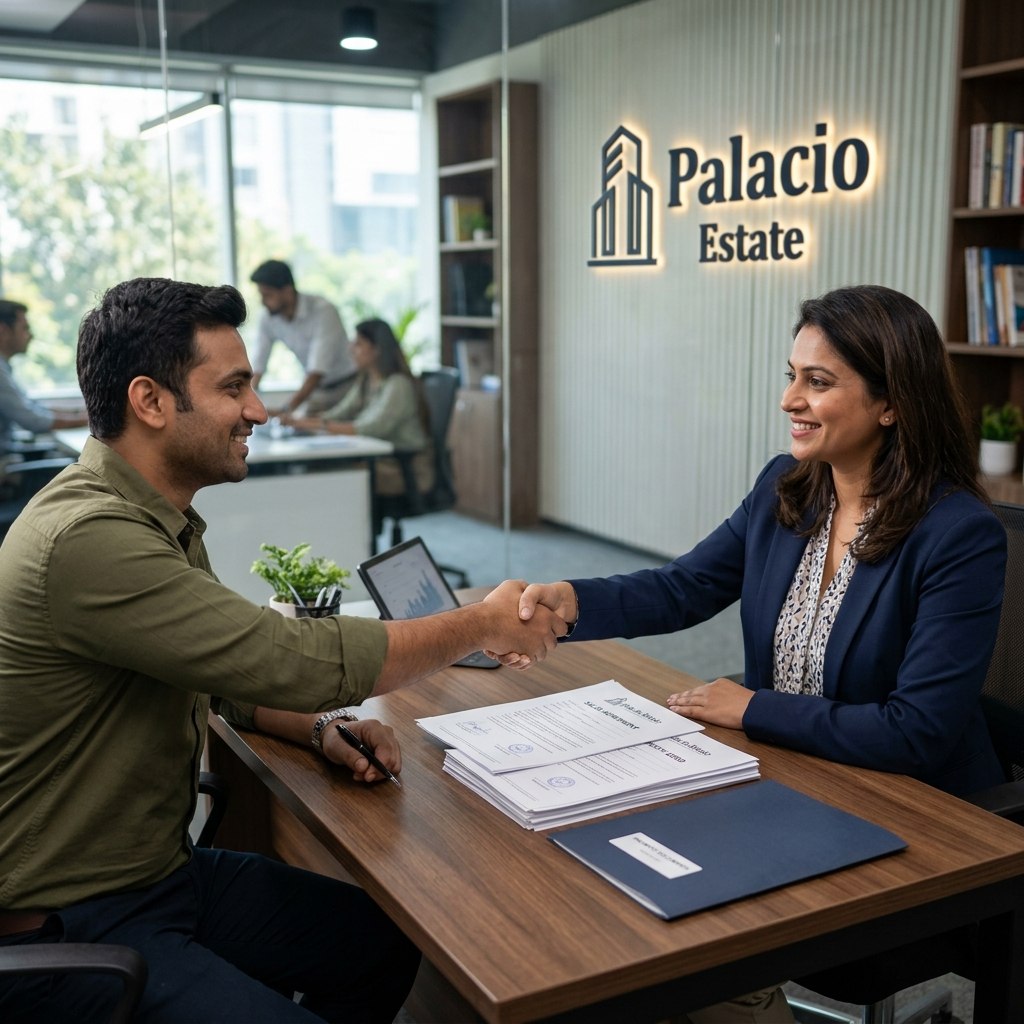
Buying a plot in Dholera is not complicated, but it does require more due diligence than buying a flat in an established city. The process has several steps, and skipping any of them can create problems later. Here is the actual process, step by step.
Step 1: Decide your budget and purpose
Before you start looking at plots, be clear about two things: how much you can spend and why you are buying.
Budget: Plots in Dholera range from Rs 900 to Rs 2,800 per square yard depending on the zone. A 100 sq. yard plot in the Activation Area costs Rs 1.5-2 lakh. A 200 sq. yard plot costs Rs 3-4 lakh. Factor in an additional 10-15% for stamp duty, registration, and legal fees.
Purpose: Are you buying to hold for 10-15 years and sell when the city develops? Or are you planning to build a house in a few years? Your purpose determines where you should buy. If you are holding for appreciation, the Activation Area or airport corridor makes sense. If you plan to build, you need a plot in a zone where residential construction is permitted and infrastructure is available.
Step 2: Research the zones
Dholera is not one uniform area. It has different zones with different characteristics:
Activation Area (22.5 sq km): This is where the most infrastructure has been built. Roads, water, power, sewage, and gas are all connected. Plots here are more expensive but have the highest likelihood of appreciation. If your budget allows, this is the safest bet.
Airport Corridor: Near the Dholera International Airport. Prices are rising faster here because of the airport's proximity. Good for long-term investors who want exposure to the airport's growth story.
TP Schemes (TP1-TP4): Town Planning schemes with approved layouts and zoning. These are government-approved developments with clear land use designations. Safer than unplanned areas.
Outer Zones: Cheaper but with less infrastructure. Development in these areas depends on future government investment and timeline. Higher risk, potentially higher reward if the city expands as planned.
Spend time understanding which zone fits your budget and risk tolerance before you start talking to developers.
Step 3: Find a reputable developer or seller
You can buy from three sources:
Government allotment: The Gujarat government allots land directly at fixed rates (Rs 6,000 per sq. meter for residential, Rs 4,000 for industrial). This is the cheapest option but the process is competitive and bureaucratic.
Private developers: Many developers have projects in Dholera. Some are reputable with completed projects and proper approvals. Others are new or have questionable track records. Research the developer thoroughly before committing.
Resale market: Existing plot owners sometimes sell. Prices can be lower than developer rates, but you need to be extra careful about title verification because you are buying from an individual, not a company with a reputation to protect.
Step 4: Visit the site in person
Do not buy a plot based on a brochure, a website, or a phone call. Visit Dholera in person. See the Activation Area, the roads, the infrastructure, and the plot you are considering buying.
What to look for during your visit:
- Is the infrastructure actually built, or is it "coming soon"?
- What is around the plot? Is it near the expressway, airport, or industrial zone?
- Are there other developments nearby, or is it empty land?
- Does the developer have an on-ground office and staff?
- Can you physically see the plot boundaries?
A site visit takes half a day from Ahmedabad via the expressway. It is worth the trip. I have seen too many cases where people bought plots without visiting and later discovered the location was not what they expected.
Step 5: Verify the documents
This is the most important step. Do not skip it or rush it.
Title deed
Ask for the title deed and ownership history. The seller should be able to show a clear chain of ownership going back at least 30 years. If there are gaps or disputes, investigate further.
NA certificate
NA stands for Non-Agricultural. If the land is still classified as agricultural, it cannot be used for residential or commercial purposes without conversion. Ask to see the NA certificate from the relevant authority.
TP scheme approval
Check whether the plot falls within an approved Town Planning scheme. The Dholera SIR has specific TP schemes (TP1 through TP4 and others). Plots outside approved TP schemes carry higher risk because there is no guarantee of infrastructure delivery.
RERA registration
If you are buying from a developer, check whether the project is registered with GujRERA (Gujarat Real Estate Regulatory Authority). The RERA number should be verifiable on the official portal. If the developer cannot provide a RERA number, ask about the zone activation status. In Dholera, RERA registration is tied to zone activation. Understand what you are buying.
Encumbrance Certificate
This document shows whether the property has any financial or legal liabilities. Get it from the sub-registrar's office. It should be clean, with no outstanding loans, disputes, or court orders against the property.
7/12 extract
This is a land record document that shows the current owner, survey number, and land classification. It is issued by the revenue department. Verify that the details match what the seller has told you.
Step 6: Hire an independent lawyer
Do not use the seller's lawyer. Hire your own real estate lawyer who can independently verify all the documents. A good lawyer will:
- Check the title chain for gaps or disputes
- Verify NA status and TP scheme approvals
- Confirm RERA registration independently
- Review the sale agreement for unfavorable terms
- Ensure the sale deed is properly drafted
This costs Rs 10,000-25,000 depending on the lawyer. It is the best money you will spend in the entire process. A lawyer can catch problems that you would never notice on your own.
Step 7: Negotiate the price
Plot prices in Dholera are not fixed, especially in the resale market. Developers have margins, and resellers have flexibility. Here are some negotiation tips:
- Get quotes from at least three different sources for similar plots in the same zone
- Use the government rate (Rs 6,000 per sq. meter for residential) as a baseline
- Point out any issues you found during your site visit or document verification
- If paying full upfront, ask for a 5-10% discount
- Be willing to investigate further if the price does not make sense
A 10-15% negotiation from the asking price is common and expected. Do not accept the first number you are quoted.
Step 8: Pay the token amount
Once you agree on a price, you will typically pay a token amount (usually 10-20% of the plot price) to reserve the plot. This is done through a token agreement or booking form.
Make sure the token agreement includes:
- Plot number, size, and location
- Agreed price and payment schedule
- Timeline for the sale deed execution
- Refund terms if the deal falls through
- Any conditions related to approvals or documentation
Pay the token amount through a bank cheque or online transfer, not cash. Keep receipts of all payments.
Step 9: Complete the sale deed
The sale deed is the legal document that transfers ownership from the seller to you. It must be executed in front of the sub-registrar at the local registration office.
Before the registration:
- Your lawyer should review the final sale deed
- Verify that all terms match the token agreement
- Ensure the seller has cleared all encumbrances
- Arrange for stamp duty payment (typically 4-6% in Gujarat)
- Arrange for registration charges (typically 1%)
At the registration office, both buyer and seller must be present (or represented by power of attorney). Biometric verification and photographs are taken. The sale deed is then registered and you receive a certified copy.
Step 10: Get the mutation done
After registration, you need to get the land record updated in your name. This is called mutation or "intkal" in local terms. It is done at the revenue office and ensures that government records show you as the new owner.
Mutation typically takes 30-60 days. Follow up with the revenue office if it is delayed. Without mutation, you may face problems when you try to sell the plot later or when the government conducts land surveys.
Costs beyond the plot price
When budgeting, remember these additional costs:
| Cost | Approximate Amount |
|---|---|
| Stamp duty | 4-6% of plot value |
| Registration charges | 1% of plot value |
| Legal fees (lawyer) | Rs 10,000 - 25,000 |
| Development charges (if applicable) | Varies by developer |
| Mutation charges | Rs 500 - 2,000 |
For a Rs 2 lakh plot, expect to pay an additional Rs 15,000-25,000 in stamp duty, registration, and legal fees. For a Rs 5 lakh plot, the additional costs are Rs 35,000-60,000.
Common mistakes to avoid
Buying without visiting. I keep repeating this because it is the most common mistake. Visit the plot. See the infrastructure. Meet the developer in person.
Skip the lawyer. The Rs 10,000-25,000 you save by not hiring a lawyer can cost you lakhs if there is a title dispute or approval issue.
Buying cheap land outside the SIR. Plots at Rs 500-700 per square yard are cheap for a reason. They are usually outside the SIR boundary, without approvals, and may never see development.
Paying cash. Always pay through bank transfer or cheque. Cash payments leave no trail and create problems if there is a dispute later.
Trusting verbal promises. If the developer promises infrastructure delivery by a certain date, get it in writing in the agreement. Verbal promises are not enforceable.
Not checking RERA. RERA registration exists to protect buyers. If a project is not RERA registered, the developer is not bound by the same rules. This is a significant risk.
For NRIs: additional steps
If you are an NRI buying from outside India, there are a few additional considerations:
- Payment must be through NRE, NRO, FCNR accounts, or inward remittance
- You can give power of attorney to someone in India to complete the registration on your behalf
- Get the power of attorney attested at the Indian embassy or consulate in your country
- TDS (Tax Deducted at Source) applies when you sell the property later
- You cannot buy agricultural land, plantation land, or farmhouses
The bottom line
Buying a plot in Dholera is a multi-step process that requires patience and due diligence. The actual transaction takes 2-4 weeks from token payment to registration, but the research and verification process can take longer.
The most important steps are the ones that protect you: site visit, document verification, independent legal review, and RERA confirmation. Skip any of these and you are taking on unnecessary risk.
If you do the work upfront, the process is straightforward and the investment can work out well over the long term.
Want help navigating the buying process? Contact our team. We can guide you through each step.