A ₹4,500 crore modernization of Bhavnagar Port, part of a multi-port corridor strategy connecting Dholera to the Saurashtra coast.
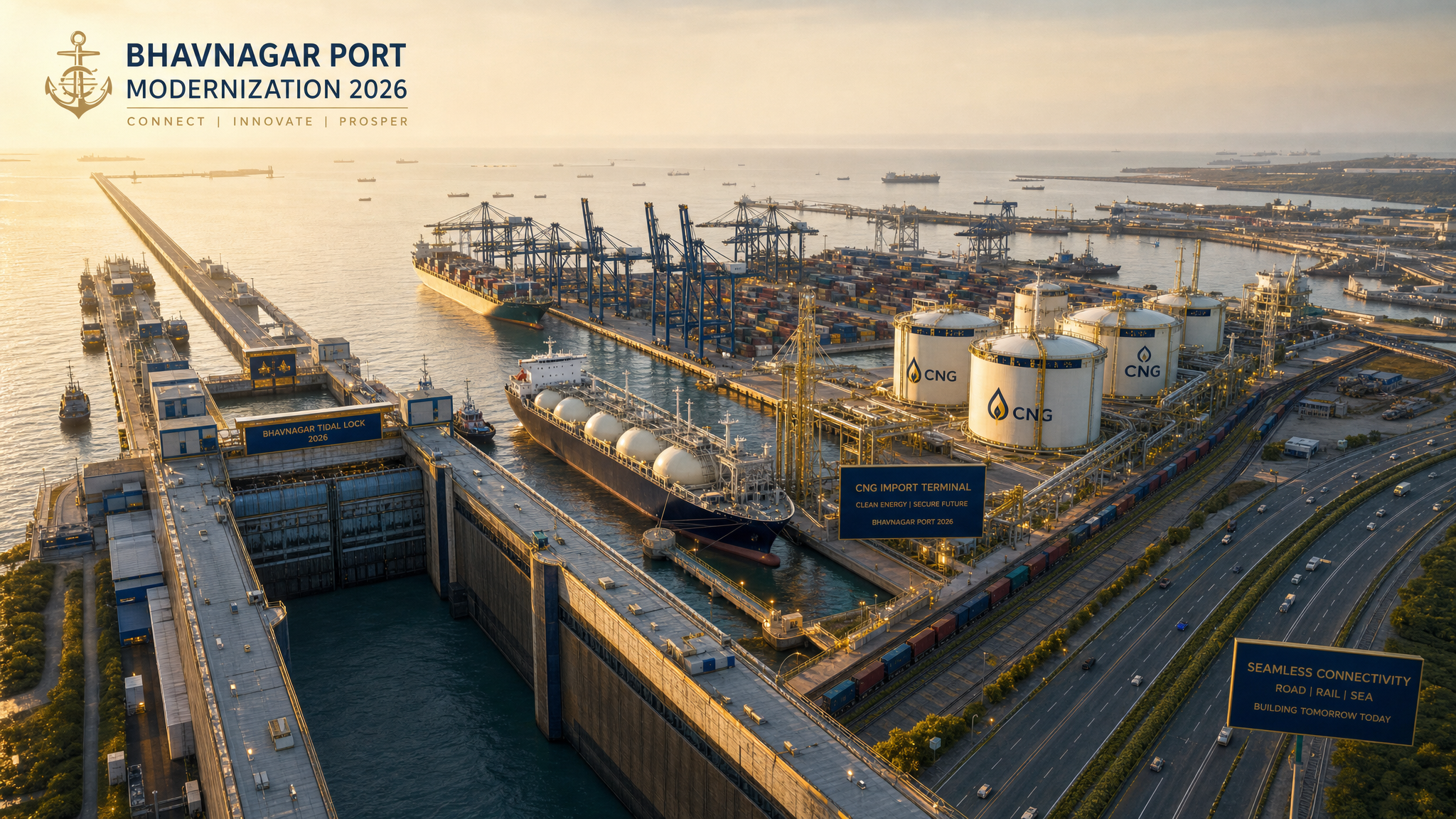
Bhavnagar Port Modernization: ₹4,500 Cr terminal with CNG import facility, tidal lock gate, and multi-purpose container handling.
Dholera sits on the Gulf of Khambhat, one of the most challenging coastal environments in India. The tidal range is extreme: 10 meters between high and low tide. Currents in the gulf reach 2.5 meters per second, fast enough to destabilize breakwaters and shift sediment constantly. Siltation runs at 180 centimeters per year, meaning a dredged channel fills up almost as fast as it is cleared.
The shoal migration data tells the story. Underwater sandbars shift from 20 meters depth to 2 meters depth within a single decade. That kind of instability makes maintaining a deep-water port at Dholera economically unviable. Every few years, you would need to re-dredge approaches that the sea fills back in. Rather than fight the gulf's natural dynamics, planners chose a different strategy.
Dholera's maritime access comes through a multi-port corridor, connecting the industrial zone to existing deep-water ports along the Saurashtra coast. The most significant of these is Bhavnagar Port, **65 km from Dholera** by road and rail. By modernizing Bhavnagar and linking it to Dholera through dedicated freight corridors, the region gets port access without building on unstable terrain.
The corridor model also distributes risk. If one port faces maintenance shutdowns or weather disruptions, cargo can reroute through others. Saurashtra has multiple existing ports (Mundra, Pipavav, Bedi, Porbandar) that can serve as alternatives. The multi-port approach is more resilient than relying on a single facility.
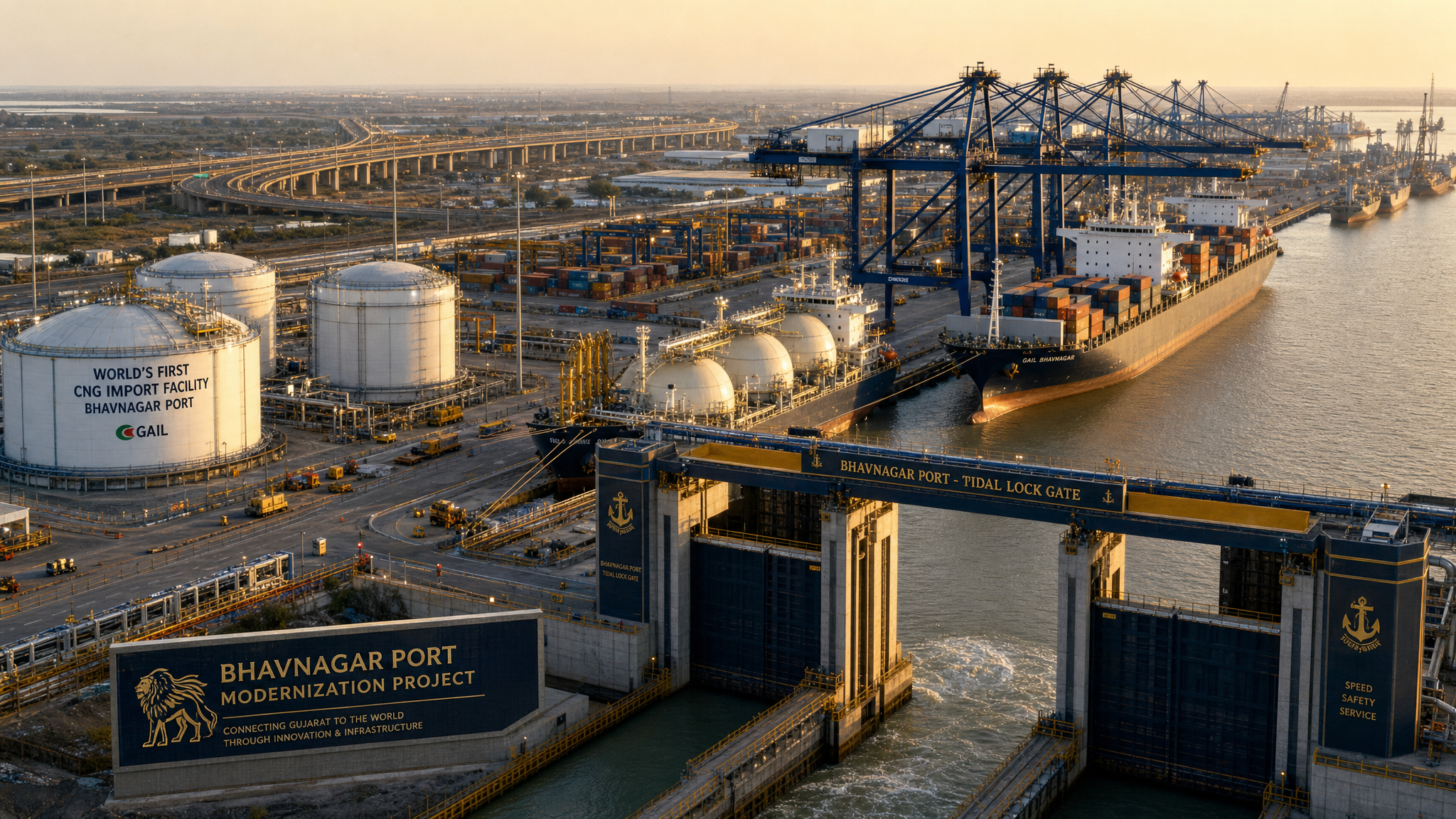
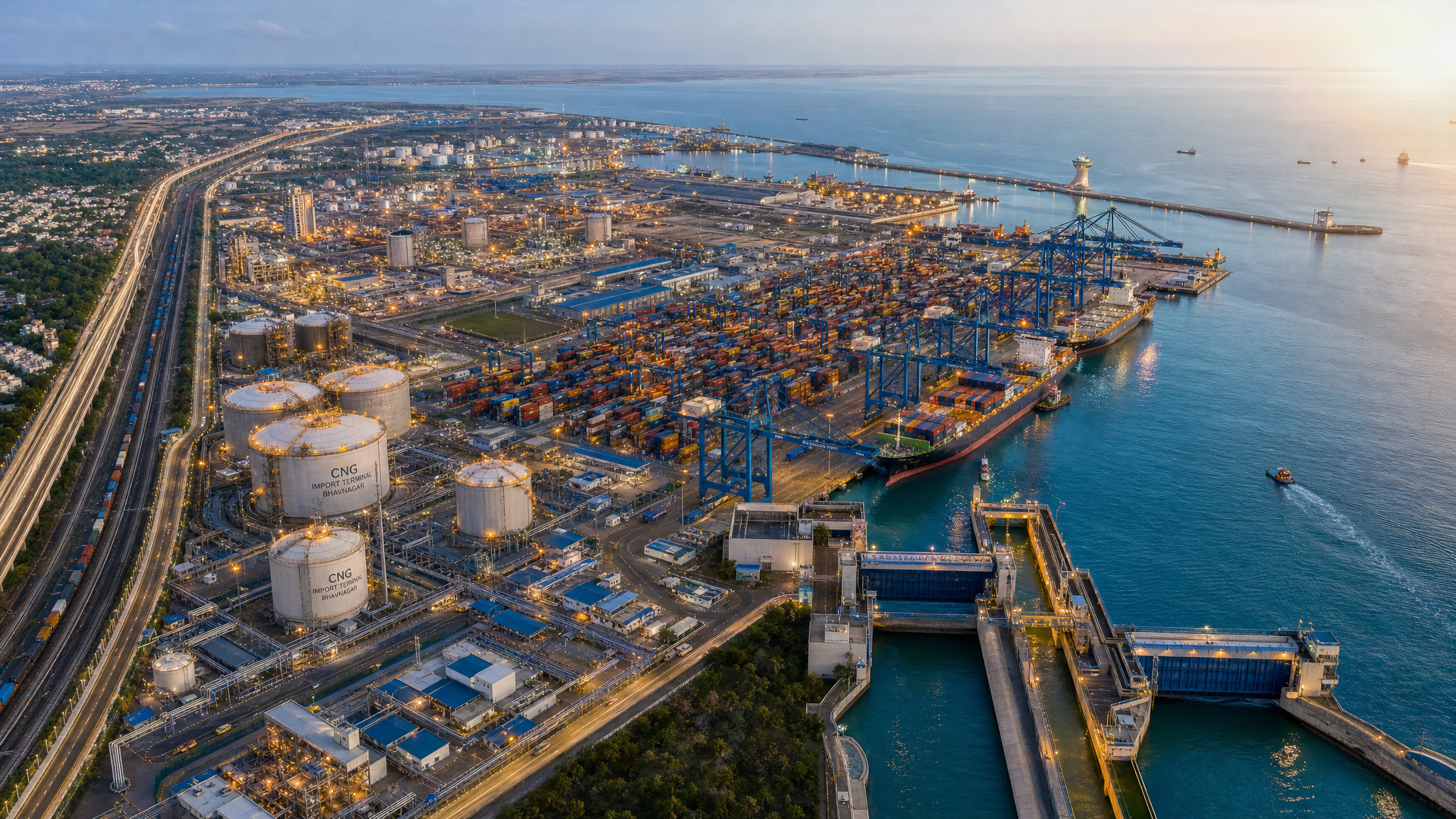

The Bhavnagar Port modernization is valued at ₹4,500 crore and is designed to bring capacity to 4.65 million tonnes per annum (MTPA). The project includes building the world's first CNG (compressed natural gas) import terminal, a response to India's push to use natural gas as a transition fuel. The terminal will handle LNG and CNG carriers, supplying gas to industrial users across Gujarat.
Another engineering landmark is the 4th largest tidal lock gate in the world. Tidal lock gates allow vessels to enter and exit the port regardless of tidal state. In a gulf with 10-meter tidal swings, that capability is essential. Without a lock gate, ships would be stuck waiting for high tide to access berths. The gate ensures 24-hour operational access.
| Terminal Type | Function |
|---|---|
| Container Terminal | Standard container handling for industrial exports and imports |
| Liquid Cargo | Petrochemicals, oils, and chemical products |
| Ro-Ro (Roll-on/Roll-off) | Vehicles, heavy machinery, and oversized cargo |
| CNG Terminal | World's first, compressed natural gas import facility |
The modernization is led by a consortium of three partners. Foresight Group, based in the UK, provides the port development expertise and financing structure. Padmanabh Mafatlal, an Indian conglomerate, handles domestic construction and regulatory coordination. Boskalis, headquartered in Rotterdam, brings dredging and marine engineering capabilities. The combination of British finance, Indian construction, and Dutch maritime engineering covers the full spectrum of what a port modernization requires.
Boskalis involvement is particularly relevant given the gulf's siltation problems. The company is one of the world's largest dredging contractors and has experience maintaining ports in similarly challenging environments (the Netherlands, for instance, manages one of the most tide-dependent port systems on earth). Their expertise will be critical for keeping Bhavnagar's approach channels navigable year-round.
The Gujarat Maritime Board's Vision 2047 sets a target of 2 billion tonnes of total cargo capacity across all Gujarat ports. That is an enormous number, roughly double the current throughput. The plan relies on expanding existing ports (Bhavnagar, Mundra, Pipavav) rather than building new ones from scratch. The logic is the same as Dholera's own approach: work with what the coast gives you, not against it.
For Dholera specifically, the multi-port corridor means that any factory built in the SIR can ship and receive cargo through Bhavnagar or other Saurashtra ports within a few hours. The expressway and rail corridor handle the land-side logistics. The port handles the sea-side logistics. Together, they give Dholera the maritime connectivity of a coastal city without the geological risks of building on the Gulf of Khambhat.
The port corridor gives Dholera a significant competitive advantage over inland industrial areas. Manufacturers who need to import raw materials or export finished goods can do so without the added cost and time of transporting cargo to distant ports. The proximity to Bhavnagar Port means that container ships can be loaded and dispatched within hours of production, not days.
For businesses in the semiconductor, electronics, and precision manufacturing sectors, quick access to maritime logistics is critical. These industries often work with just-in-time supply chains where delays of even a few hours can disrupt production schedules. Dholera's port connectivity ensures that these businesses can maintain the tight logistics timelines required by global customers.
The port corridor also opens up opportunities for businesses that rely on imported machinery and equipment. Setting up a factory in Dholera means that heavy machinery, specialized tools, and raw materials can be delivered directly from the port to the factory floor with minimal intermediate handling. This reduces damage risk, lowers transportation costs, and speeds up the setup process for new industrial operations.
